Understanding HMRC Self-Assessment Penalties
Every year, thousands of UK taxpayers face unexpected fines simply because they miss a deadline or misunderstand HMRC rules. Whether you are a freelancer, a landlord, or a small business owner, dealing with taxes can feel stressful. However, filing your tax return late or missing a payment will quickly lead to costly fines and interest charges.
HMRC uses a strict penalty system to encourage everyone to submit their information and pay their tax on time. The most important thing to remember is that even if you owe no tax at all, failing to submit your return by the deadline will still trigger an automatic fine.
By understanding how these late Self-Assessment penalties work and planning ahead, you can easily avoid unnecessary charges.
Key Self-Assessment Deadlines You Must Know
The simplest way to avoid an HMRC fine is to know your deadlines. Missing these key dates is the number one reason people receive penalties.
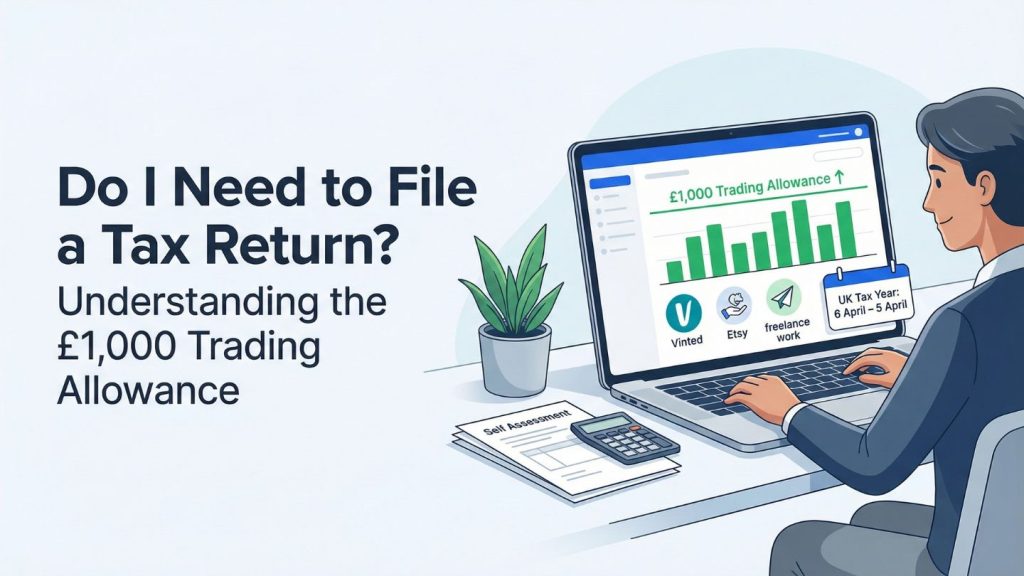
The standard UK tax year runs from 6 April to 5 April. After the tax year ends, you must report your income based on a strict timeline.
Make sure you memorise these Self-Assessment deadlines:
- 5 October: Deadline to register for Self-Assessment (if you are filing for the first time).
- 31 October: Deadline if you want to submit a paper tax return.
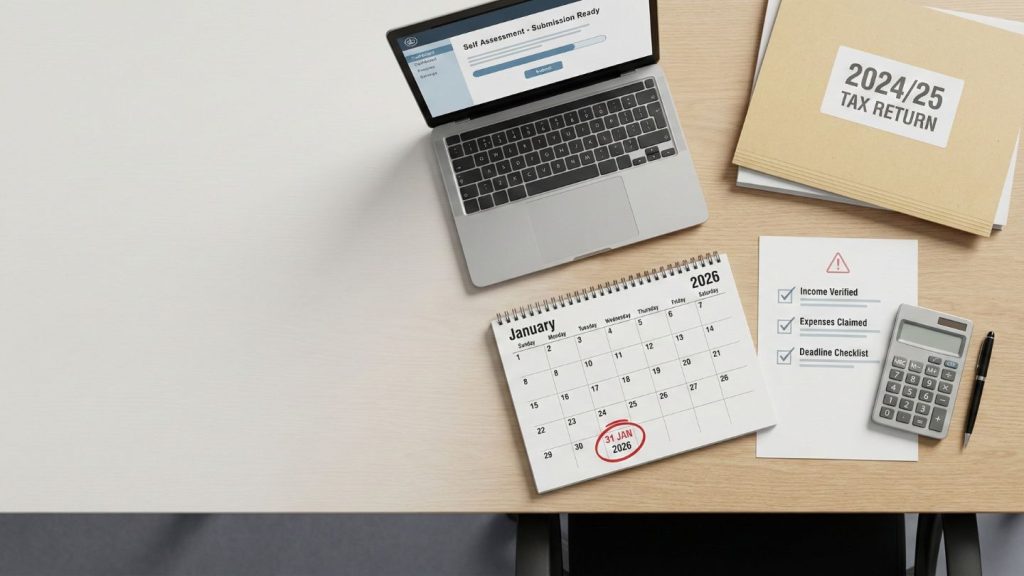
- 31 January: Deadline to submit your online tax return AND pay the tax you owe.
- 31 July: Deadline for your second “payment on account” (an advance payment towards your next tax bill, if applicable).
Fines for Late Tax Return Submission
If you miss the 31 January online filing deadline, HMRC will automatically issue a penalty. These fines increase significantly the longer you delay.
Here is how late filing penalties add up:
- 1 day late: An automatic £100 fixed penalty.
- 3 months late: A daily charge of £10 (up to a maximum of £900).
- 6 months late: An additional fine of £300, or 5% of the tax you owe (whichever is higher).
- 12 months late: Another £300 fine, or 5% of the tax you owe (whichever is higher).
These charges stack on top of each other. This means ignoring a tax return for a year could cost you over £1,600 in fines alone, before you even pay your actual tax bill.
Fines for Late Tax Payments
Filing your tax return is only half the job. You must also pay the tax you owe by the 31 January deadline. If you submit your return on time but pay late, HMRC will charge a separate set of penalties.
Late payment penalties are usually calculated like this:
- 30 days late: A fine equal to 5% of your unpaid tax.
- 6 months late: An additional 5% fine on the outstanding amount.
- 12 months late: A further 5% fine on the outstanding amount.
On top of these percentage-based fines, HMRC also charges daily interest on the unpaid tax until the balance is completely cleared. The longer you wait, the more expensive your tax bill becomes.
Top Tips to Avoid HMRC Tax Penalties
Avoiding fines is all about organisation. Here are four simple steps to keep your tax affairs in order.
1. Register for Self-Assessment Early
Many people receive fines because they simply forget to tell HMRC they have started earning taxable income. If you are new to working for yourself or renting out property, you must register by 5 October following the end of the tax year you started.
Registering early gives HMRC time to send you a Unique Taxpayer Reference (UTR) number, which you need to file your return.
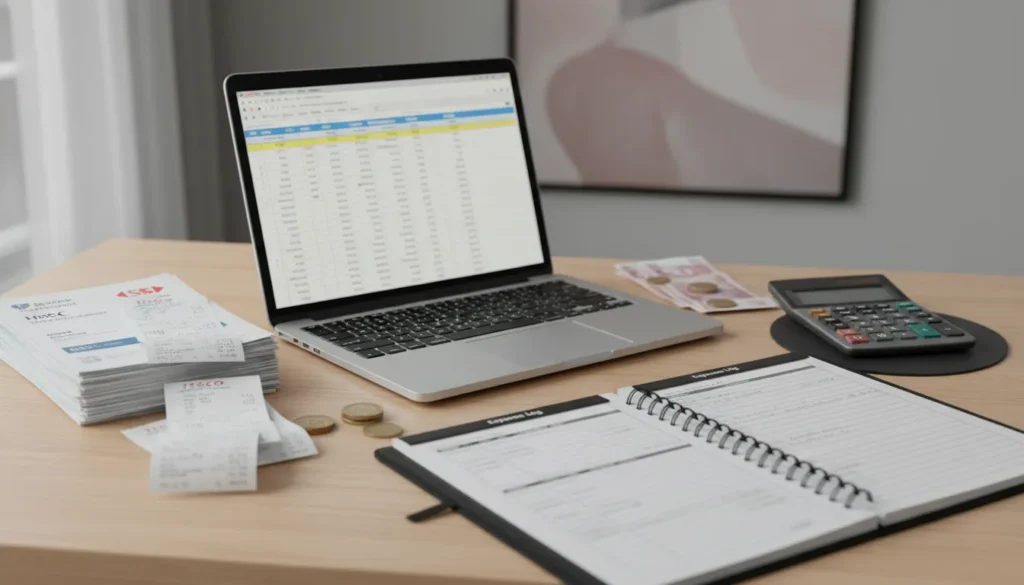
2. Keep Accurate Financial Records
Poor record-keeping makes filing a tax return highly stressful. If you do not track your income and expenses throughout the year, you are more likely to make mistakes or delay filing.
You should keep hold of:
- Sales invoices and income statements
- Bank statements
- Receipts for allowable business expenses
- Mileage logs for business travel
- Mortgage interest statements (for landlords)
Using simple bookkeeping software or hiring an accountant to manage your records makes filing fast and accurate.
3. Submit Your Tax Return Early
You do not have to wait until January to submit your Self-Assessment tax return. You can file it any time after the tax year ends on 5 April.
Filing early gives you plenty of time to fix mistakes, find missing receipts, and calculate exactly how much tax you owe without any last-minute panic.
4. Save for Your Tax Bill in Advance
One of the biggest reasons people pay late is that they simply do not have the cash available in January. A highly effective strategy is to set aside 20% to 30% of your earnings into a separate savings account every month. When tax season arrives, the money is already there waiting.
What to Do If You Cannot Pay Your Tax Bill
If you have calculated your tax and realise you cannot afford to pay it by 31 January, do not ignore the problem. Ignoring HMRC will lead to harsh penalties and potential tax investigations.
Instead, contact HMRC immediately. They offer a solution called a Time to Pay arrangement. This allows you to spread your tax bill over several months through affordable direct debit instalments.
If you contact HMRC and set this up before the deadline (or within 30 days of missing it), you can often avoid the standard late payment penalties, though you will still need to pay interest.
How Professional Accountants Can Help
Taxes can be complicated, especially if you juggle multiple sources of income like freelance work and property rentals. Working with a professional accountant removes the stress of tax season.
A qualified accountant will track your deadlines, calculate your exact tax bill, and ensure you claim every legal expense to lower what you owe. The fee you pay an accountant is usually far less than the cost of a harsh HMRC penalty or a costly calculation error.
If you need help getting your taxes sorted, contact the team at Protax. We help UK individuals and businesses stay completely compliant with HMRC.
Conclusion
Avoiding Self-Assessment penalties is entirely possible with a little early preparation. By knowing the strict HMRC deadlines, keeping your receipts organised, and submitting your tax return well before January, you remove the risk of late filing fines.
Always plan ahead for your tax payments by saving a portion of your income year-round. If you are ever unsure about your tax situation, seeking professional advice ensures your tax return becomes a simple, stress-free task rather than a costly burden.

Muhammad Bilal is a Fellow Chartered Certified Accountant (FCCA) and Director of Protax Consultants, a London-based accounting firm specialising in tax advisory, compliance, and business accounting services.
Bilal qualified with the Association of Chartered Certified Accountants (ACCA) in 2009 and later achieved FCCA status after gaining extensive professional experience. With more than 13 years of experience in accounting, taxation, and auditing, he advises SMEs, landlords, contractors, and charities on tax planning, compliance, and financial management.
As a registered HMRC agent, Bilal assists clients with Self Assessment tax returns, corporation tax planning, VAT compliance, payroll services, and HMRC enquiries.
Bilal holds a BSc (Hons) in Applied Accounting and leads the audit and compliance function at Protax Consultants.
Company Verification:
Protax Consultants Ltd – Company Number 14701253
View Companies House Record