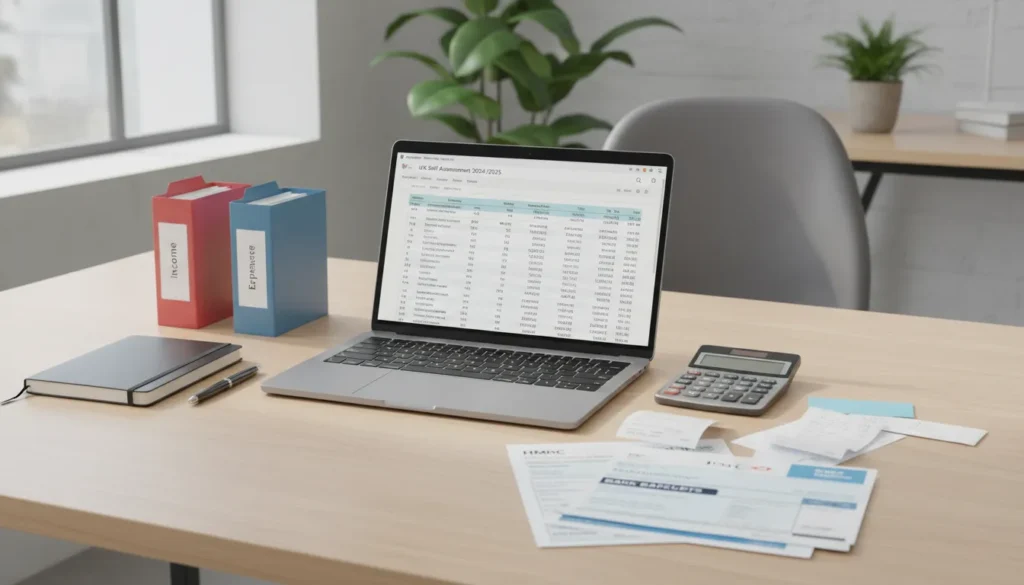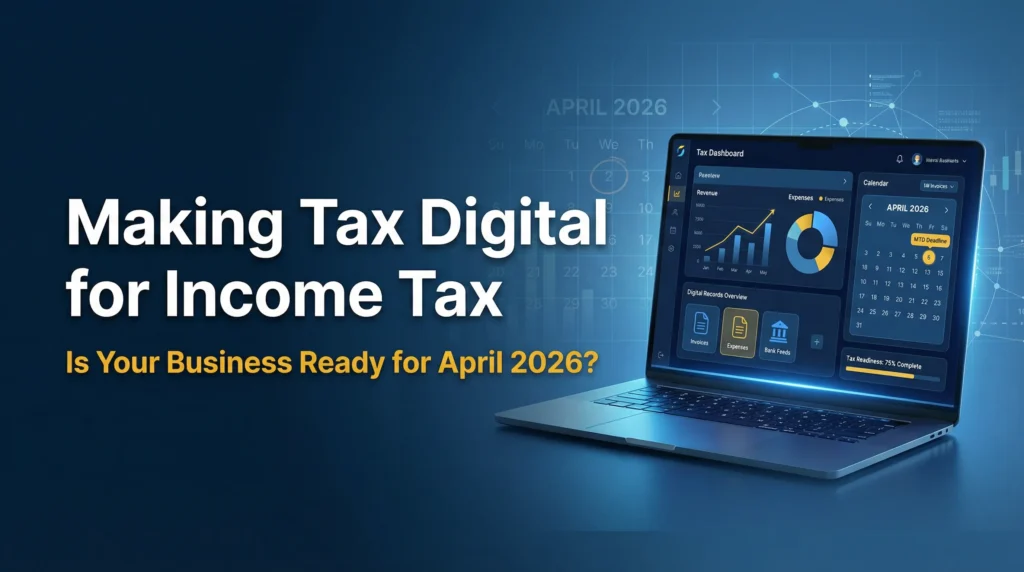
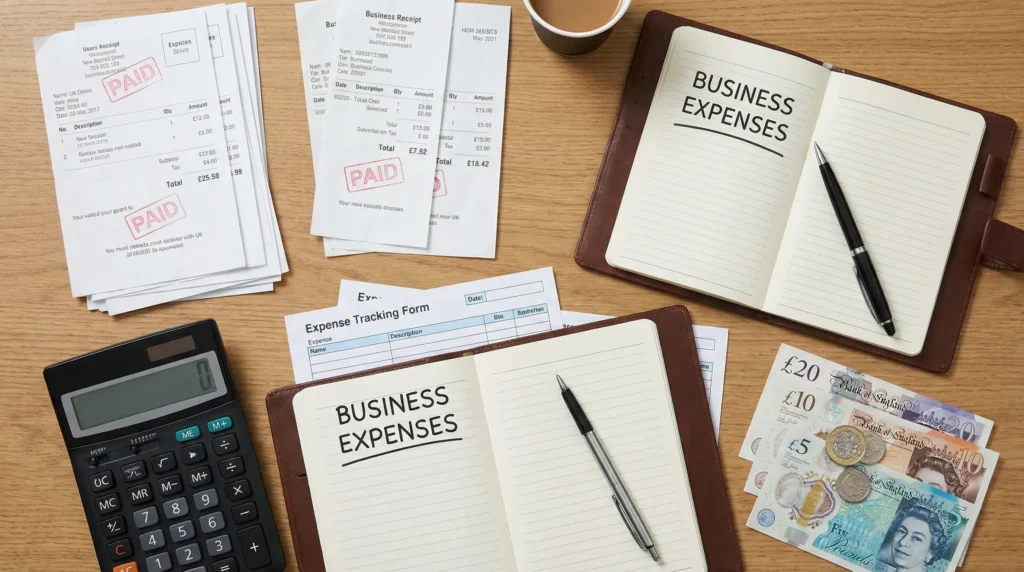
Understanding which expenses you can claim on your Self Assessment tax return is the best way to legally reduce your tax bill.
Many UK freelancers, sole traders, and landlords end up paying more tax than necessary. This usually happens because they do not realise what costs they are allowed to deduct from their income.
HM Revenue & Customs (HMRC) allows you to subtract specific running costs from your total earnings before your final tax bill is calculated. By understanding these rules, you can keep more of your hard-earned money while remaining fully compliant.
This simple guide explains exactly what you can, and cannot, claim as a business expense.
What Are Allowable Expenses?
In simple terms, if you spend money purely to run your business or earn an income, you can usually deduct that cost from your taxable profits. HMRC calls these “allowable expenses.”
The “Wholly and Exclusively” Rule
For an expense to be valid, HMRC states it must be incurred “wholly and exclusively” for business purposes.
If you buy something that is used for both business and personal reasons (like a mobile phone or a laptop), you can only claim a tax deduction for the business portion. For example, if you use your phone 70% of the time for work and 30% for personal calls, you can only claim 70% of the bill as a business expense.
Office, Admin, and Working From Home
Running a business requires everyday supplies. While a single pen or notebook might seem trivial, these administrative costs add up over the tax year.
Everyday Office Supplies
Common office costs you can claim include:
- Stationery (pens, paper, notebooks)
- Printer ink and toner
- Postage and courier fees
- Business phone and broadband bills
- Office furniture (desks, chairs, filing cabinets)
- Software subscriptions (such as graphic design tools or antivirus programs)
Claiming Home Office Costs
If you run your business from home, HMRC allows you to claim a portion of your household bills. You can deduct a percentage of your heating, electricity, internet, and council tax based on how much time you spend working and how many rooms you use for business.
Alternatively, HMRC offers a “simplified flat-rate” option for working from home. This allows you to claim a fixed monthly amount based on your working hours, which many sole traders prefer because it requires much less paperwork.
Business Travel and Transport Expenses
If your work requires you to travel, you can usually claim these transport costs. However, there is one strict rule: commuting from your home to your permanent workplace does not count as a business trip. You can only claim for journeys outside of your normal commute, such as visiting a client or attending a conference.
Vehicle Mileage and Running Costs
If you use your own car or van for work, you can claim business mileage using HMRC’s standard rates (currently 45p per mile for the first 10,000 miles, and 25p thereafter). This flat rate covers your fuel, insurance, and vehicle wear-and-tear.
Public Transport and Overnight Stays
Other allowable travel expenses include:
- Train, bus, or tube tickets for work journeys
- Taxi fares for business meetings
- Flights for work-related trips
- Hotel accommodation and reasonable meal costs during overnight business stays
Professional Fees and Financial Costs
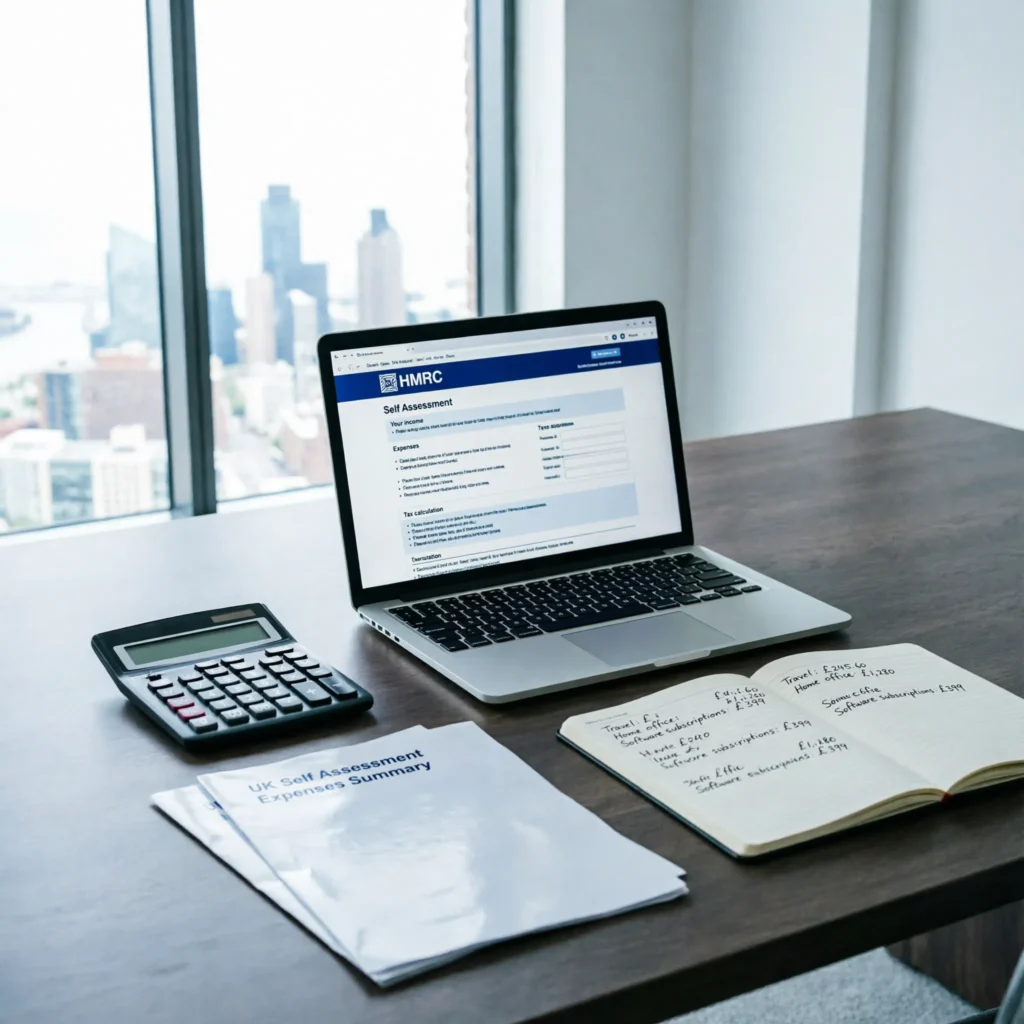
Many business owners rely on experts to help them stay compliant and manage their finances. Fortunately, these professional fees are largely deductible.
You can claim for:
- Accountancy and bookkeeping services
- Legal fees directly related to your business
- Business bank account charges
- Payment processing fees from providers like Stripe, PayPal, or SumUp
Interestingly, hiring an accountant to file your tax return can actually help pay for itself, as their professional fee is considered a legitimate business expense that lowers your overall taxable profit.
Marketing and Advertising Expenses
To grow your business, you need to promote it. HMRC treats marketing costs as a necessary part of trading, meaning these expenses are allowable.
Typical marketing deductions include:
- Website design, hosting, and domain renewals
- Online advertising (like Google Ads or Facebook Ads)
- Printed materials (flyers, business cards, brochures)
- Email marketing software subscriptions
- Fees for online directories or trade memberships
Staff, Wages, and Contractor Costs
If your business grows to the point where you need to hire help, your payroll and contractor costs become major deductible expenses.
You can claim for:
- Salaries and wages paid to employees
- Employer National Insurance contributions
- Staff pension contributions
- Invoices paid to freelancers and subcontractors
- Staff training courses related to your industry
Note: Always ensure you classify your workers correctly. Treating someone as a freelancer when HMRC considers them an employee can lead to severe tax penalties.
Buying Equipment, Tools, and Machinery
Most trades and professions require specific equipment. While everyday items are treated as standard expenses, larger purchases are handled slightly differently under tax rules.
Capital Allowances Explained
If you buy an expensive asset that you will keep in your business for several years, such as a company vehicle, heavy machinery, or high-end computers, you usually claim this through “Capital Allowances.”
For most small businesses, the Annual Investment Allowance (AIA) lets you deduct the full cost of these large items from your profits in the very same tax year you buy them. This is a great way to reduce your tax bill while upgrading your business tools.
Business Insurance and Property Costs
Protecting your business is essential, and insurance premiums are fully allowable expenses. You can claim for:
- Public liability insurance
- Professional indemnity insurance
- Employer’s liability insurance
- Business contents and equipment cover
If you rent a separate commercial office, workshop, or studio, you can also claim the rent, business rates, and utility bills for that property.
The Importance of Keeping Accurate Records
Knowing what to claim is only half the battle. You must also prove it.
HMRC requires you to keep clear evidence of your income and expenses for at least five years after the 31 January tax return deadline. If HMRC decides to check your return, you will need to produce these records.
Ensure you keep:
- Purchase receipts and supplier invoices
- Accurate mileage logs showing dates and destinations
- Business bank statements
To make this easier, many modern businesses use cloud accounting software (like Xero or QuickBooks). These tools allow you to snap photos of your receipts and track your costs digitally, removing the stress of lost paperwork.
Conclusion
Claiming your allowable expenses is the smartest way to legally lower your Self Assessment tax bill. From a pack of printer paper to international business flights, ensuring every valid cost is accounted for makes a huge difference to your bottom line.
The secret to a stress-free tax season is understanding the “wholly and exclusively” rule and keeping immaculate records throughout the year. If your financial situation is complex, or if you are worried about claiming the wrong things, the safest option is to seek professional advice. A qualified accountant will ensure your return is accurate, compliant, and fully optimised.
If you need expert help maximising your tax deductions, contact our team today.
FAQs
1. Can I claim my daily commute as a business expense?
No. Travel between your home and your regular, permanent place of work is classified as personal commuting and cannot be claimed on your tax return.
2. Do I need to keep physical paper receipts for my tax return?
No, digital copies are perfectly acceptable. You can scan or photograph your receipts and store them on your computer or in cloud accounting software.
3. What happens if I use my laptop for both work and personal use?
If you use an item for both, you must estimate the percentage of time it is used for business. You can then only claim that specific percentage of the cost as a tax deduction.
4. How long do I need to keep my expense records?
If you are self-employed, you must keep your financial records (including receipts, mileage logs, and invoices) for at least five years after the 31 January submission deadline of the relevant tax year.
5. Can I claim the cost of my accountant?
Yes. The fees you pay to an accountant or bookkeeper to manage your business finances and prepare your Self Assessment return are classed as an allowable business expense.

Muhammad Bilal is a Fellow Chartered Certified Accountant (FCCA) and Director of Protax Consultants, a London-based accounting firm specialising in tax advisory, compliance, and business accounting services.
Bilal qualified with the Association of Chartered Certified Accountants (ACCA) in 2009 and later achieved FCCA status after gaining extensive professional experience. With more than 13 years of experience in accounting, taxation, and auditing, he advises SMEs, landlords, contractors, and charities on tax planning, compliance, and financial management.
As a registered HMRC agent, Bilal assists clients with Self Assessment tax returns, corporation tax planning, VAT compliance, payroll services, and HMRC enquiries.
Bilal holds a BSc (Hons) in Applied Accounting and leads the audit and compliance function at Protax Consultants.
Company Verification:
Protax Consultants Ltd – Company Number 14701253
View Companies House Record