Keeping accurate financial records is an essential part of completing a Self Assessment tax return in the UK. HM Revenue and Customs (HMRC) requires taxpayers to maintain documents that support the figures reported on their return.
Good record keeping helps you calculate your tax correctly, reduces the risk of mistakes, and provides evidence if HMRC reviews your return.
Many people only think about records when the tax deadline approaches. However, organising your financial information throughout the year makes the process far easier and helps ensure your return is accurate.
Why Record Keeping Matters for Self Assessment
HMRC expects taxpayers to keep clear records showing how their income and expenses were calculated.
Proper documentation helps you:
- Calculate your tax correctly
- Support the figures reported to HMRC
- Identify legitimate expenses you can claim
- Respond quickly if HMRC requests evidence
If HMRC checks your tax return and you cannot provide supporting records, you may face penalties or additional tax assessments.
Keeping organised records throughout the year is therefore both practical and legally important.
What Records HMRC Requires
The type of records you must keep depends on your income sources. However, most taxpayers should maintain documents showing income received and expenses claimed.
Common records include:
Income Records
These show how much money you received.
Examples include:
- Invoices issued to customers
- Payment confirmations
- Bank statements showing deposits
- Receipts for income received
Expense Records
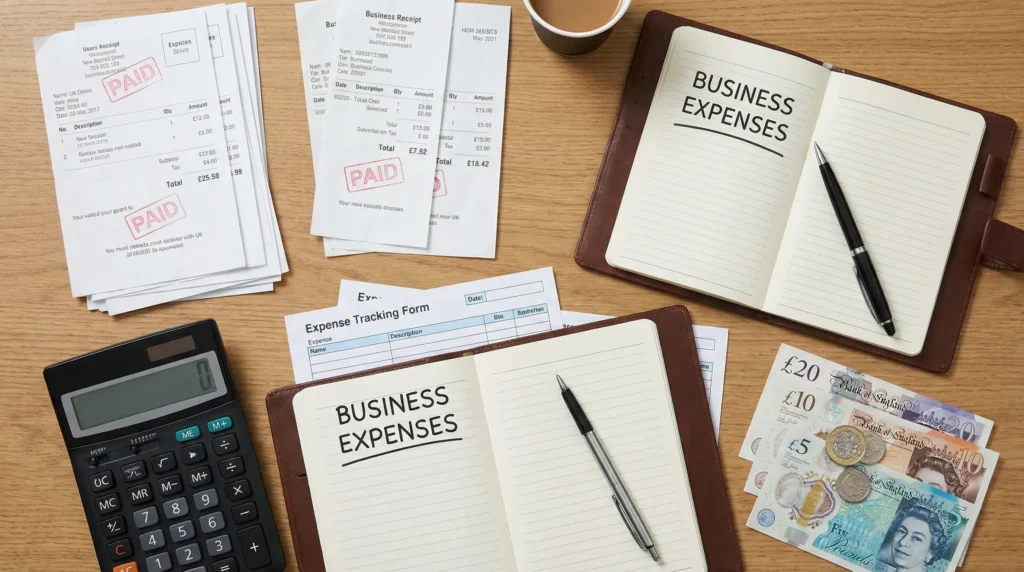
If you claim business expenses, you must keep proof.
Examples include:
- Receipts for business purchases
- Equipment or supply invoices
- Travel and mileage records
- Professional service invoices
These documents show that the expenses claimed are genuine and related to your work.
Bank and Financial Statements
Statements from business or personal accounts help verify both income and expenses. They also support reconciliation if HMRC reviews your figures.
Payroll or Subcontractor Records
If you employ staff or work with subcontractors, you should keep:
- Payroll reports
- PAYE submissions
- Payment records
Asset Purchase Records
If you buy equipment or machinery for business use, keep documents showing:
- Purchase price
- Purchase date
- Supplier details
These records may support capital allowance claims.
Records Self-Employed People Should Keep
If you are self-employed or running a small business, your records must clearly show how your profit was calculated.
Typical records include:
- Sales invoices
- Customer payment receipts
- Business bank statements
- Purchase receipts for materials or equipment
- Travel and mileage logs
- Utility bills if working from home
- Accounting software reports
These records help calculate your business profit. HMRC taxes this profit, not your total income.
Maintaining accurate records also helps identify allowable expenses that reduce your tax liability.
Records Landlords Should Keep
Landlords must keep detailed records of both rental income and property expenses.
Important documents include:
- Tenancy agreements
- Rent payment records
- Letting agent statements
- Mortgage interest statements
- Property repair and maintenance receipts
- Insurance policies
- Service charge invoices
These records help calculate your rental profit, which is the income remaining after allowable expenses.
Without accurate records, landlords may miss legitimate deductions or incorrectly report income.
How Long Must Self-Assessment Records Be Kept?
HMRC has clear rules about record retention. In most cases, you must keep your records for at least five years after the 31 January filing deadline of the relevant tax year.
Example
- Tax Year: 2023–2024
- Filing Deadline: 31 January 2025
- Records Must Be Kept Until: 31 January 2030
If you submit your tax return late, you may need to keep your records for longer.
This requirement ensures that if HMRC reviews a previous return, you still have the evidence needed to support your figures.
Digital Records and Accounting Software
HMRC accepts digital copies of financial documents.
Many taxpayers now store records using:
- Accounting software
- Cloud storage
- Receipt scanning apps
Digital systems make it easier to track income, store receipts, and produce financial reports.
They also help reduce the risk of losing paperwork.
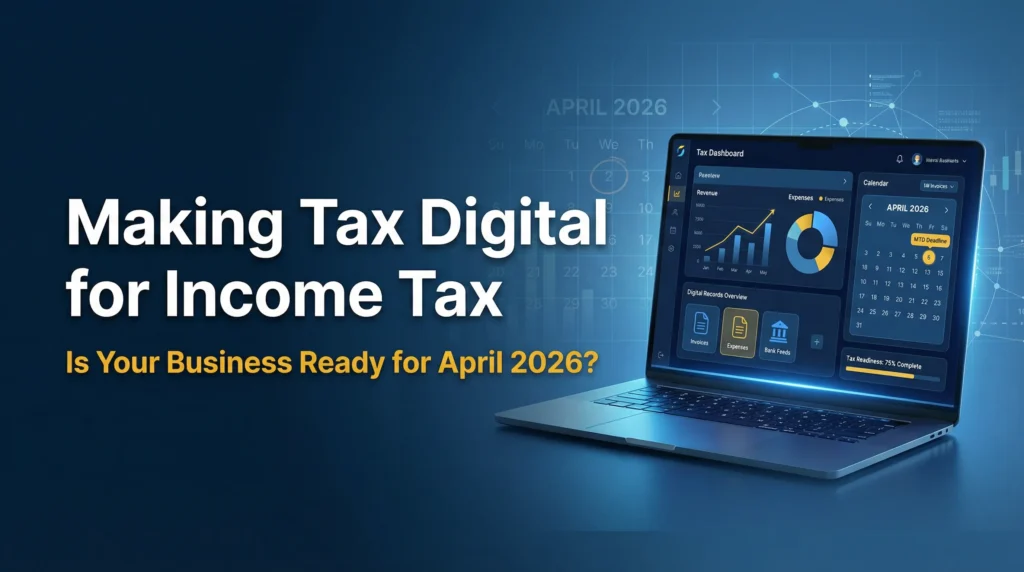
Digital record keeping is becoming increasingly important as the UK expandsMaking Tax Digital (MTD), which requires businesses to maintain digital records and submit tax information electronically.
Practical Tips for Keeping Records Organised
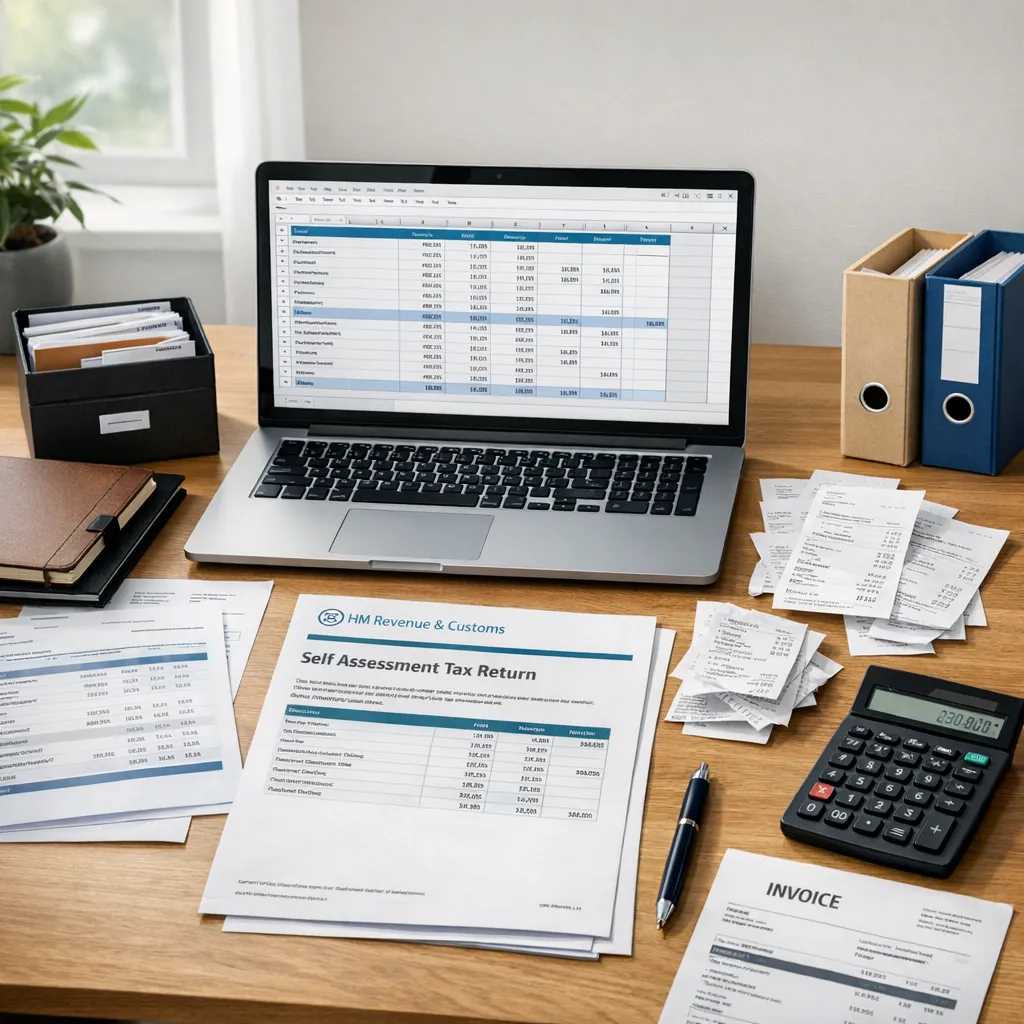
A good organisation makes completing your Self Assessment tax return much easier.
Helpful habits include:
- Keeping business and personal bank accounts separate
- Saving receipts digitally as soon as possible
- Recording income and expenses monthly
- Storing invoices and financial statements in organised folders
Regular record keeping reduces errors and prevents last-minute stress before the tax deadline.
When Professional Advice May Help
Record keeping can become more complex if you have multiple sources of income.
For example:
- Self-employment income
- Property rental income
- Investment income
- Overseas income
In these situations, professional accounting advice can help ensure your records meet HMRC requirements and that your tax return is prepared correctly.
Key Takeaway
HMRC requires taxpayers completing a Self Assessment tax return to keep records that support their income and expenses.
Most records must be kept for at least five years after the filing deadline.
Maintaining organised documentation throughout the year helps you:
- Calculate your tax accurately
- Claim legitimate expenses
- Avoid penalties
- Respond quickly to HMRC enquiries
Whether you are self-employed, a landlord, or earning additional income, good record-keeping is an essential part of staying compliant with UK tax rules.
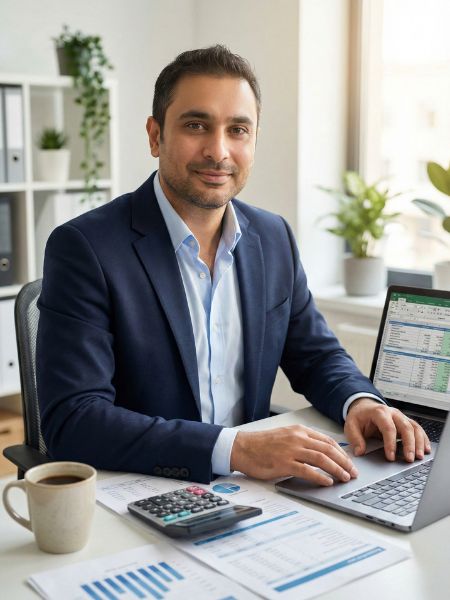
Muhammad Bilal is a Fellow Chartered Certified Accountant (FCCA) and Director of Protax Consultants, a London-based accounting firm specialising in tax advisory, compliance, and business accounting services.
Bilal qualified with the Association of Chartered Certified Accountants (ACCA) in 2009 and later achieved FCCA status after gaining extensive professional experience. With more than 13 years of experience in accounting, taxation, and auditing, he advises SMEs, landlords, contractors, and charities on tax planning, compliance, and financial management.
As a registered HMRC agent, Bilal assists clients with Self Assessment tax returns, corporation tax planning, VAT compliance, payroll services, and HMRC enquiries.
Bilal holds a BSc (Hons) in Applied Accounting and leads the audit and compliance function at Protax Consultants.
Company Verification:
Protax Consultants Ltd – Company Number 14701253
View Companies House Record