Quick Summary
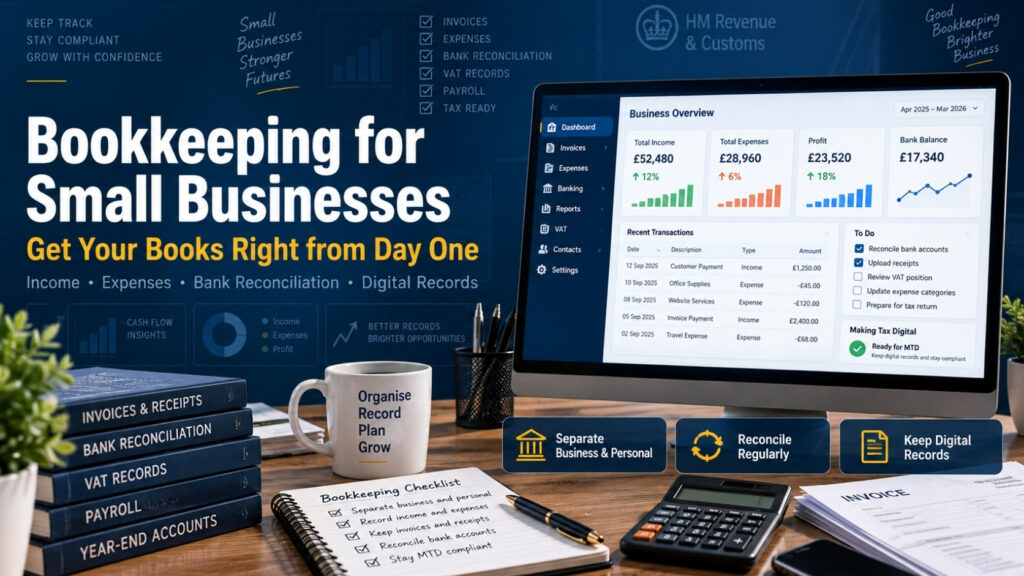
Good bookkeeping starts with separating business and personal finances, recording income and expenses regularly, keeping invoices and receipts, and reconciling your bank account so your records match actual transactions. Suitable accounting software can make this easier, especially if Making Tax Digital applies. For bookkeeping for small businesses, the most important thing is consistency. Keeping accurate records throughout the year helps you understand cash flow, prepare tax returns and accounts more efficiently, and reduce the risk of errors or missing information.
Good bookkeeping is one of the simplest ways to keep a business under control. It shows what is coming in, what is going out, what customers owe you and whether enough cash is being set aside for tax.
For UK owners, getting bookkeeping for small businesses right from the beginning also makes Self Assessment, VAT returns, annual accounts and HMRC queries easier to deal with. The aim is not to build a complicated system. It is to keep accurate records consistently so you know where the business stands.
What Records Should a Small Business Keep?
Good small business bookkeeping starts with recording every important financial transaction and keeping the evidence behind it.
For most businesses, this includes sales, invoices, expenses, bank and card transactions, payroll records, VAT records where relevant, assets and loans. Limited companies should also keep clear records of dividends and director loan transactions.
Your books should explain what happened, not simply show that money moved. Each payment should have a clear business reason and supporting record. This is why bookkeeping for business needs a clear structure from the start.
How to Set Up Your Bookkeeping from Day One
If you are learning how to do bookkeeping, begin by separating business money from personal spending. Limited companies should use a company bank account, while sole traders will usually find record-keeping easier when business transactions are kept separate.
Next, choose a system that suits the business. Software such as FreeAgent, Xero, QuickBooks, Sage accounting or another suitable package can import transactions, store documents, and simplify reconciliation. A spreadsheet may still work for a very simple business where appropriate, although any Making Tax Digital requirements must still be met.
Use clear categories for income and expenditure rather than pushing everything into “miscellaneous”.
Then create a routine. Weekly updates work well for many businesses. Monthly may be enough for a small operation, but leaving bookkeeping for small businesses until the tax deadline increases the chance of missing receipts and incorrect figures.
Keep Evidence Behind Every Figure
A bookkeeping entry is only part of the record. You should also retain invoices, receipts, contracts and relevant bank information.
Self-employed people generally need to keep business records for at least five years after the 31 January deadline for the relevant Self Assessment tax year. Companies normally need to keep accounting records for six years from the end of the relevant company financial year, subject to certain exceptions.
Digital storage makes this easier by linking receipts and supplier invoices to the relevant transactions.
People looking for bookkeeping small business guidance sometimes focus almost entirely on expenses. Sales records matter just as much. If a payment platform deducts fees before transferring money, recording only the net deposit can understate turnover.
Accurate bookkeeping for small businesses should therefore reconcile the gross sale, fees deducted and the amount received.
Making Tax Digital and Bookkeeping in 2026/27
Making Tax Digital for Income Tax now affects some sole traders and landlords. From 6 April 2026, individuals with total qualifying gross income of more than £50,000 from self-employment and property generally need to use MTD for Income Tax. The threshold falls to more than £30,000 from April 2027 and more than £20,000 from April 2028.
Those within the rules need compatible software to keep digital records and send quarterly updates to HMRC. If you are learning how to do bookkeeping under MTD, the practical point is simple: records need to be maintained throughout the year rather than rebuilt shortly before the tax return deadline.
Importantly, MTD for Income Tax does not apply simply because you are a limited company director. Salary and dividends from your company do not count as qualifying self-employment or property income for the MTD threshold. A director can still fall within MTD personally if they also have enough qualifying sole-trade or property income.
Limited companies still need proper accounting records for Corporation Tax and Companies House requirements, but those obligations are separate from MTD for Income Tax.
Bookkeeping Mistakes That Cause Problems
Many bookkeeping problems come from inconsistent habits rather than difficult rules.
Common mistakes include mixing personal and business transactions, failing to reconcile bank accounts, losing receipts, recording net marketplace deposits as total sales, duplicating costs and using vague expense categories.
Another small business bookkeeping mistake is assuming every payment from the business bank account is automatically an allowable expense. Equipment purchases, loan repayments, personal drawings, director loan transactions and dividends may all need different treatment.
Poor records also make tax planning harder. If the books are months behind, you may not know the true profit or how much cash to reserve for tax.
Reliable bookkeeping for small businesses gives you useful information before a deadline arrives.
When Should You Consider Outsourcing?
Doing the books yourself can work when the business is straightforward. Professional support becomes more valuable when you register for VAT, employ staff, run a limited company, enter MTD for Income Tax or regularly correct old transactions.
At Protax Consultants, we help sole traders and limited companies organise their records, maintain accurate books and produce reliable information for accounts and tax reporting. Good bookkeeping for business should save time, improve visibility and reduce avoidable errors.
Frequently Asked Questions
Can I do my own bookkeeping for a small business?
Yes. You can maintain your own records provided they are complete, accurate and meet the tax and reporting rules that apply to your business. But you should get proper knowledge of it.
How often should I update my books?
Weekly works well for many businesses. Monthly may be enough for a very small operation.
What is a simple bookkeeping small business setup?
A separate business bank account, suitable accounting software, digital copies of invoices and receipts, and regular bank reconciliation are a strong starting point.
Final Thoughts
Good bookkeeping doesn’t need to be complicated; it just needs to be consistent. Getting your setup right from day one keeps your cash flow clear, saves you money, and takes the stress out of tax season.
Whether you’re starting fresh or need help straightening out your books, getting expert bookkeeping support early prevents costly mistakes down the road. Contact Protax Consultants today for a free setup review.
Muhammad Bilal is a Fellow Chartered Certified Accountant (FCCA) and Director of Protax Consultants, a London-based accounting firm specialising in tax advisory, compliance, and business accounting services.
Bilal qualified with the Association of Chartered Certified Accountants (ACCA) in 2009 and later achieved FCCA status after gaining extensive professional experience. With more than 13 years of experience in accounting, taxation, and auditing, he advises SMEs, landlords, contractors, and charities on tax planning, compliance, and financial management.
As a registered HMRC agent, Bilal assists clients with Self Assessment tax returns, corporation tax planning, VAT compliance, payroll services, and HMRC enquiries.
Bilal holds a BSc (Hons) in Applied Accounting and leads the audit and compliance function at Protax Consultants.
Company Verification:
Protax Consultants Ltd – Company Number 14701253
View Companies House Record